Source: HMRC Tax Receipts and NICs bulletin
What the Numbers Show
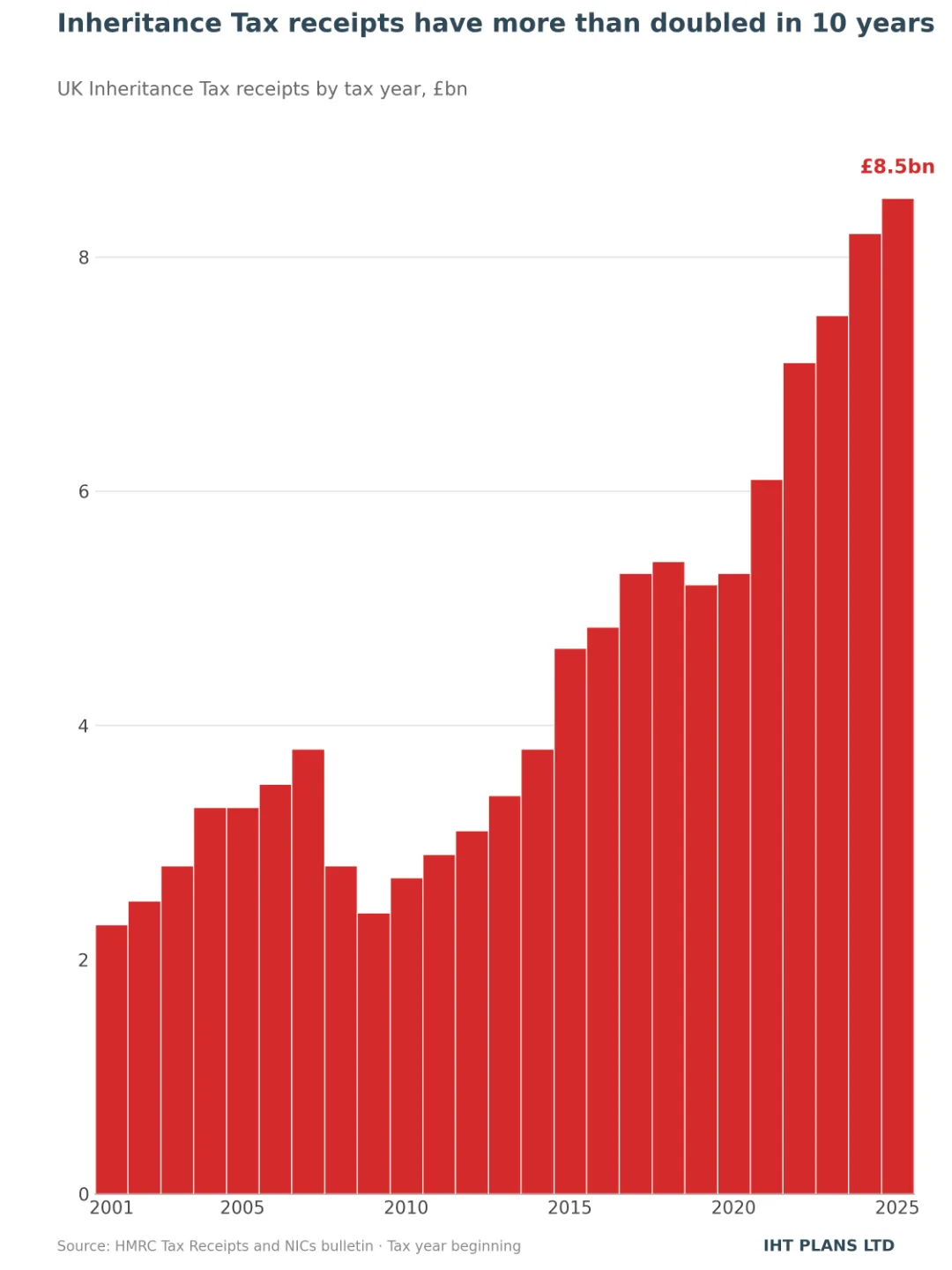
HMRC figures show UK Inheritance Tax receipts have climbed steadily over the past two decades, and have more than doubled in the last ten years alone — reaching an estimated £8.5bn in 2025–26. This isn't because rates have gone up. It's because more and more ordinary estates are being pulled into paying the tax for the first time.
Why This Is Happening
Frozen Thresholds
The nil-rate band (£325,000) and residence nil-rate band (£175,000) have been frozen for a number of years, rather than rising with inflation as they once did. A threshold that felt generous a decade ago buys far less protection today.
Rising Property Values
Across the South East in particular, average property values have increased substantially. For many families, the value of the family home alone now accounts for a large share of their Inheritance Tax exposure — even before savings, pensions or other assets are counted.
Growing Pension Pots
Years of pension auto-enrolment and long-term saving mean many people are approaching retirement with larger pension pots than previous generations. From April 2027, most unused pension funds will be counted as part of the taxable estate for the first time — bringing many more estates over the threshold.
Reduced Reliefs for Business and Agricultural Assets
From April 2026, full relief on qualifying business and agricultural assets will be capped at £2.5 million. Business owners and farming families who previously assumed these assets were fully protected will need to plan around the new cap.
What This Means for You
If your household's property, savings, pension and other assets add up to more than your available allowances, your estate is likely to face a bill at 40% on the excess — whether or not you think of yourself as "wealthy." The sooner you understand your position, the more options you have for managing it.